In case you live somewhere off the beaten track, you may not have noticed that British banks do their fair share of charging when it come to banking service, or in some cases, for services that are supposed to be done but in fact aren't! And now we hear that bank overdraft charges on current
accounts are so complicated even a maths PhD student can’t always work
them out, well, according consumer experts anyway.
A customer could be hit with a £150 bill for a large unauthorised overdraft without a clear explanation as to why, Which? said. The
consumer body wants ministers to make banks provide honest and easily
understood information about the true cost of going into the red. Or, as Jim Bowen used to say on Bulls Eye, "You don't get nowt for two in a bed!"
Currently, the finance giants use a
mix of daily and monthly charges combined with further fees linked to
the number of cheques and payments that are bounced. Each
bank has its own combination of charges with the result that customers
cannot make meaningful comparisons to find which is cheapest.
Which?
asked 12 people, including a maths PhD student, to work out the cost of
an unauthorised overdraft for leading banks by giving them 48 mock bank
statements on which the rules were set out.They got only seven out of 48 correct between them. The finance giants used for the study were RBS-NatWest, HSBC/First Direct, Lloyds, Barclays, Halifax, Nationwide and Santander.
The
charges for the same small unauthorised overdraft could range from £10
to £50 depending on the bank, according to Which? The range on a medium
overdraft was £44 to £125, while the figure on a large overdraft ran
from £66 to £150. Which? said: ‘Overdraft charges may
appear easy to compare, as banks charge either ‘‘simple’’ daily fees or
interest on their main current accounts.
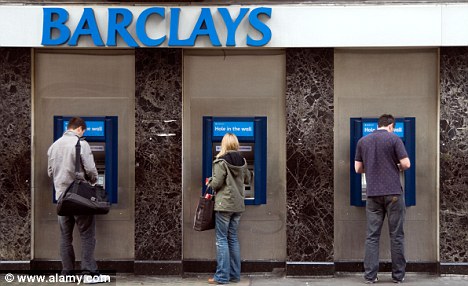
My pet hate is Barclays, but not because of it's
charges. I keep an account with them and always have at least 20K in the
account at any one time. I don't receive any interest on my money, so
when I want something that's a little off the normal route e.g.
to get a new card sent overseas or a statement, or a transaction that
isn't in the official ledger, I get nothing, not even an explanation or
an email. The same thing happens when I use my card abroad. I have a
ridiculous call that's made asking me for information about my mother's
polo habit or my second cousin twice removed's poker strategy. In other
words, nothing that has anything to do with security or banking and
everything to do with pissing me off and not forcing them to give me
what I want.


